
Yule
The Wheel / December 21
Yule is the winter solstice: the longest night, and then the morning after. In the Northern Hemisphere, the sun reaches its farthest point south, the day is shortest, and something that has been receding stops and begins to return. In astronomical terms, this is a point of reversal. In nearly every culture that noticed the solstice at all, it was understood as a birth: the returning sun, the child of light emerging from the longest dark.
The Old Norse Jól (cognate with Yule) was a significant midwinter festival, probably lasting multiple days, associated with the dead, with Odin's Wild Hunt, and with feasting and community. The álfablót (elf sacrifice) was sometimes performed at this time or in the general midwinter period. Evidence for the pre-Christian Norse festival is fragmentary and contested among scholars, but what emerges clearly is that the midwinter period was understood as liminal: the dead were close, the gods were moving, and the need for protection and good fortune was acute.
Germanic peoples throughout northern Europe marked the solstice with the Yule log, a massive log burned through the long night. The ashes of the Yule log were kept for protection and for use in planting. The log was lit from the previous year's remaining fragment, creating a continuity of fire across seasons, a preservation of the hearth through the dark. The practice appears in records from multiple Germanic-speaking regions and survived as folk custom long after Christianization.
The Roman Saturnalia, celebrated throughout December, was a festival of inversion: masters served slaves, normal social rules were suspended, gifts were exchanged. The midwinter date of Christmas is the most famous example of solstice-proximate festival survival into Christian practice, and the specific date of December 25 (four days after the solstice, when the sun's return would have been visible to naked-eye observers) appears in the Roman calendar well before it became the standard date for Christmas.
Correspondences
| Date | December 21 (varies 20-23) |
| Colors | Black (longest night), deep green (the evergreen, the undying), gold (the returning sun), white (snow and clarity) |
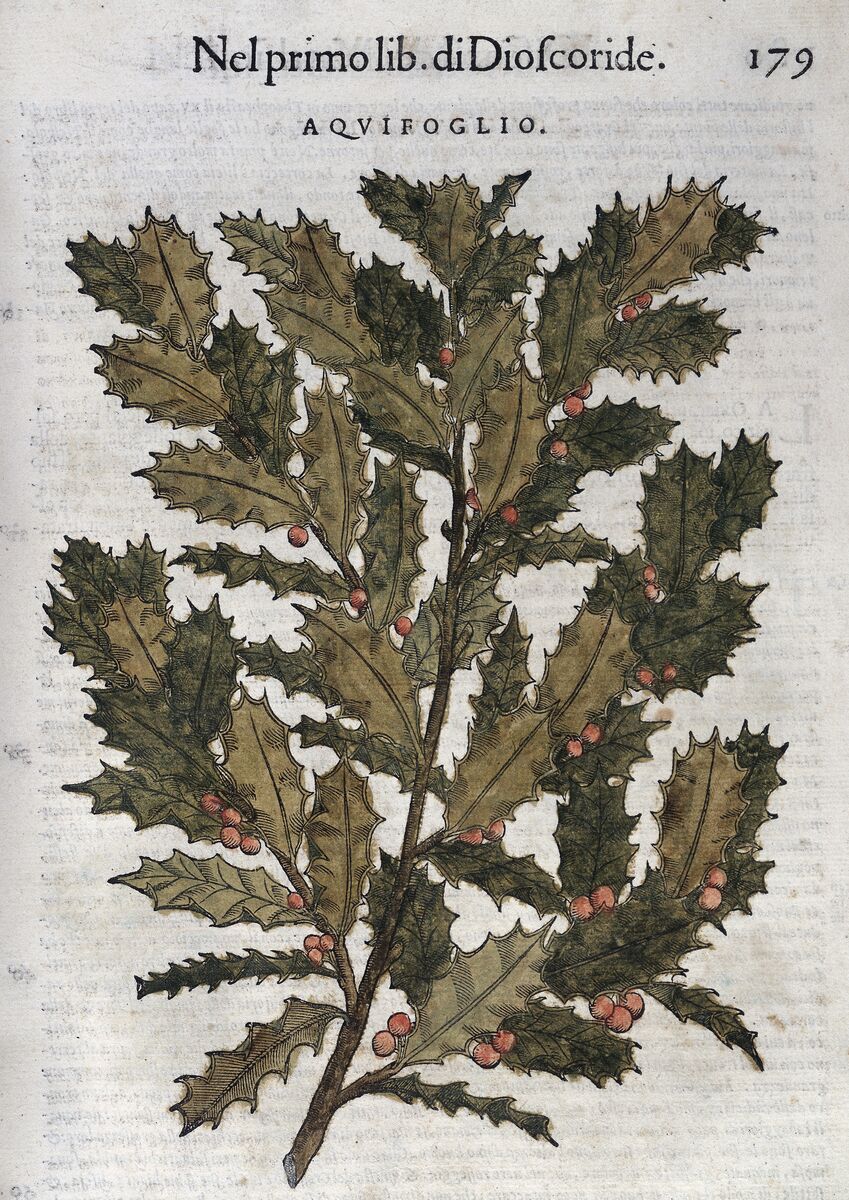
| Herbs | Holly, mistletoe, pine, juniper, bay, frankincense, myrrh |
| Crystals | Garnet, ruby, clear quartz, bloodstone, green aventurine |
| Element | Earth / Fire |
| Planet | Sun (returning) |
| Intentions | Rebirth, hope, the return of light, patience in darkness, illumination |
| Fiber | Black and gold held together; deep forest green; white for snow and clarity |
| Knot count | 8 (the wheel, the cycle) |
Traditional Workings
Keeping a vigil through the longest night: This is the most ancient Yule working and the most straightforward. Stay awake through the night, either alone or in community. Keep a candle lit. Watch the dark. At dawn, greet the returning sun. The vigil is an act of witness: you are present for the turning.
Yule log burning: If you have a fireplace, burning a Yule log on the solstice night is a direct continuation of the northern European tradition. Reserve a fragment of the log to be used to light next year's fire. Write intentions on paper and feed them to the flames; what burns is released, what survives the night returns with the light.
Making light: Yule is one of the most natural times for candle magic. Light a candle at sundown on the solstice and keep it burning through the night. Gold for the sun's return; green for the evergreen's persistence; white for clarity in the coming year. For timing by planetary hours, see Planetary Hours & Days.
Gift-making: The practice of making, rather than buying, winter gifts has deep roots and is entirely coherent with a Yule practice. Knitting or weaving something for someone you love through the darkening days of December is working with the season's natural energy: the dark invites interior work, making, creating in the long evenings before the light returns.
Notes for the Dye Pot
The Yule palette is darkness with the memory of light in it. Deep forest greens, the color of pine and fir holding against the winter. Black that isn't entirely black but contains a depth. Gold that is not cheerful yellow but old, warm, firelit. White that is snow, or the cold clarity of a solstice morning sky. The dark Arachne base colorways are natural here; consider adding a flash of gold or garnet alongside them.
Closing
The longest night has an end. The sun that turned south through the autumn reverses course at Yule and begins the slow return north. Nothing about this is fast; January and February still come. But at Yule, the reversal is accomplished. The wheel has turned. The next sabbat, Imbolc, will bring the first signs of that return.
Sources
- Bede, De Temporum Ratione, ch. 15 — the Latin with an English translation, including the passage on Giuli and the Mōdraniht.
- Brú na Bóinne — the World Heritage listing for Newgrange, whose passage admits the sun only at the winter solstice.
- Frazer, The Golden Bough — the survey of Yule log custom across the Germanic-speaking regions.
Continue reading: Imbolc · Samhain · Color Correspondences · Planetary Hours & Days