
Thread as Intention
The Practice / Fiber Magic
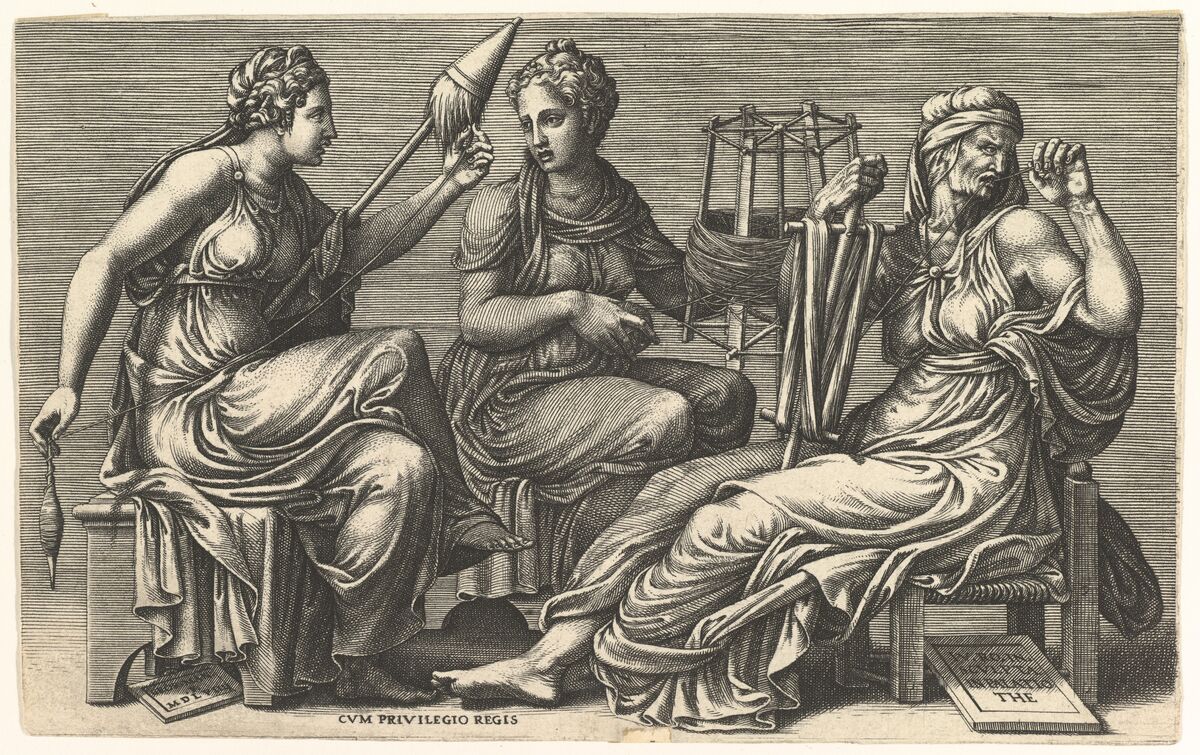
The connection between fiber and magic is old enough that it may not be possible to draw a line between the two. In cultures across the ancient world, spinning and weaving were not simply economic activities; they were understood as acts that shaped fate, bound power, and maintained the order that kept the living world together. The Norns spin the threads of human destiny. The Fates measure and cut them. Penelope's loom is the mechanism by which she holds her world in place. These are not metaphors for something else. They are descriptions of what textile work was understood to be.
The specific practices that contemporary fiber magic draws on come from multiple streams, and it's worth knowing something about each of them, both for historical accuracy and because the distinctions matter when you're choosing how to work.
The Red Thread
The red thread appears in Jewish, Chinese, and Indian folk traditions as a protective and binding charm, and in each context it works slightly differently.
In Ashkenazi Jewish practice, a red woolen thread tied around the left wrist is a protection against the evil eye (ayin hara). The specific tradition of the Rachel's Tomb thread, in which red thread is wound around Rachel's tomb in Bethlehem and cut into smaller pieces to be worn as amulets, is documented at least to the medieval period. The association of the color red with protection against malevolent attention is ancient; red threads appear in protective contexts throughout Tanakh and rabbinic literature.
In Chinese tradition, the red thread of fate (hóng xiàn) connects those whose lives are meant to intersect, typically in marriage. The thread is tied around the ankle or finger by the lunar deity of marriage, Yuè Lǎo, and cannot be broken, though it may stretch. This is a different usage, a binding rather than a ward, but the fundamental concept, that thread carries relational force, is consistent.
The significance of red specifically is not arbitrary. Red is the color of blood, and therefore of life, vitality, and also of sacrifice and threshold crossings. It is the color that most reliably catches the eye of a malevolent spirit and redirects its attention. Across these traditions, the thread is doing similar work even when the exact cosmology differs.
Norse and Celtic Knotting
In Norse tradition, the concept of seiðr, the form of magic most commonly associated with the Norns and with Freya, involves weaving, spinning, and the manipulation of fate threads. The verb seið is connected etymologically to words for binding and to siðr, custom or practice. The association with textile work is built into the language. Archaeological finds including the Oseberg burial (834 CE) included a variety of textile tools alongside other ritual objects.
Celtic folk practice preserved a body of protective textile magic into the modern period through the British Isles and Ireland. Knot patterns in metalwork and manuscript illumination have been interpreted as having protective or binding function. Threads tied around specific objects, tied at crossroads, or knotted into specific patterns appear in folk remedies and charms recorded by ethnographers in the 18th and 19th centuries.
For more on knot magic specifically, including the documented practices and how to work them, see The Nine-Knot Tradition.
Weaving as Incantation in Greece and Egypt
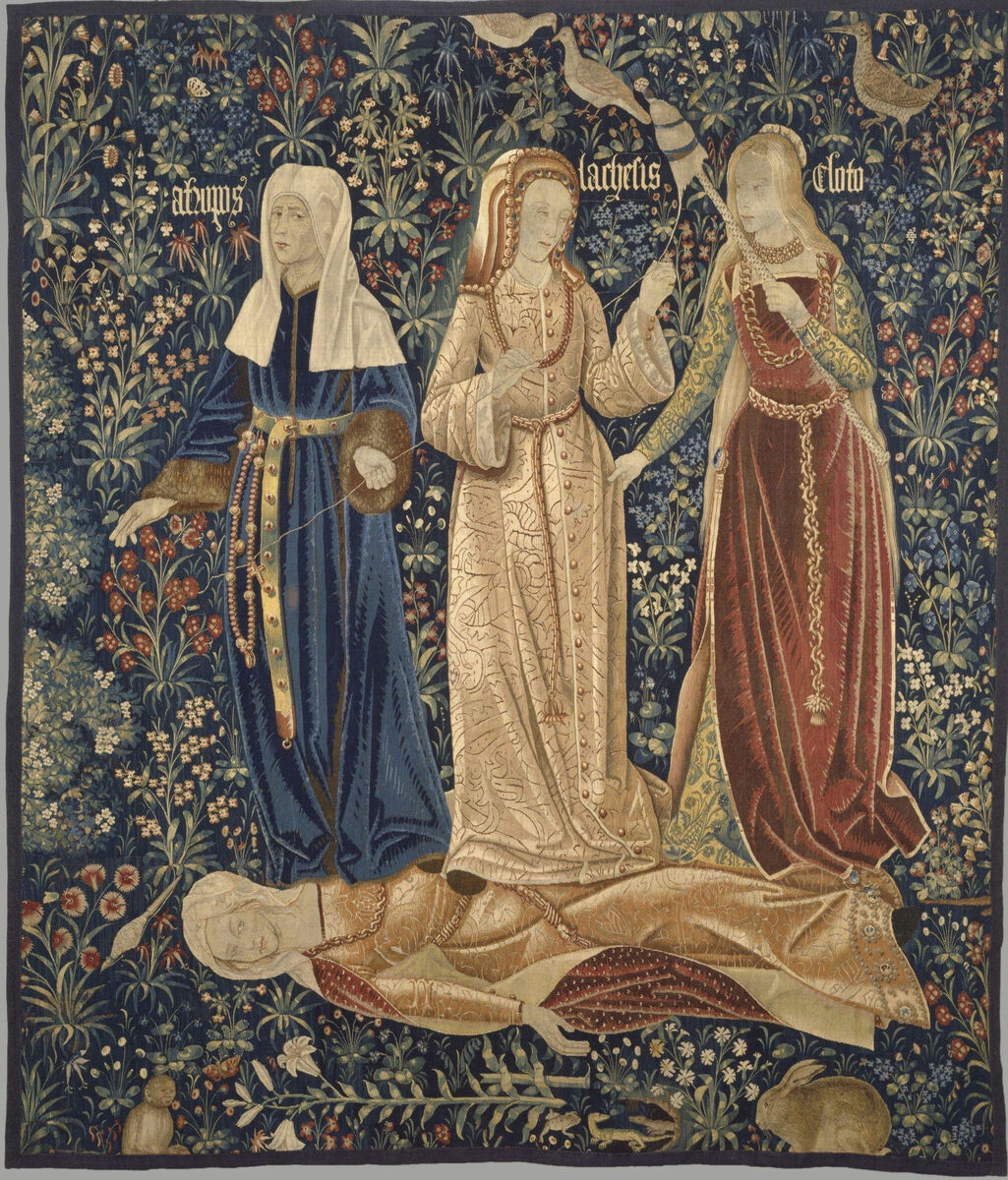
In ancient Greece, weaving was a skill associated with divinity: Athena weaves, and Arachne's contest with her is not just a craft competition but a theological confrontation. The Fates weave and measure the threads of human life. Penelope's weaving is a literal act of time-keeping and resistance.
Binding spells in the Greek magical tradition (defixiones and katadesmoi) sometimes involved physical binding of objects, threads, or figurines, and the verb katadein, to bind down, appears in magical papyri in contexts that involve both physical and metaphorical binding. The textile vocabulary is built into the magical vocabulary.
In Egypt, the Book of the Dead contains references to the spinning and weaving of the netherworld. The goddess Neith was associated with weaving and also with war and death. Mummy wrappings, the most extensive use of linen in funerary context, carried protective texts and images, the textile itself serving as the vehicle for the magical inscription.
The Evil Eye and Fiber
Across the Mediterranean and the Near East, fiber plays a specific protective role against the evil eye. Beyond the red thread already mentioned, there are traditions of specific knots tied into garments at vulnerable points, fringe on the edges of textiles (the tzitzit of the tallit being a formalized version of this), and the encoding of protective patterns into woven fabric. Elizabeth Wayland Barber's foundational work Women's Work: The First 20,000 Years documents the deep connection between textile production and apotropaic magic across Eurasia.
The logic, insofar as it can be recovered, seems to be that fiber which has been worked with intention by known hands carries something of that intention into the world. A garment knitted by a mother for a child is a protective object partly because of the hours of attention it represents. The charm begins to seem less metaphysical when you consider how genuinely different a handmade object is from a manufactured one.
What This Means for the Contemporary Practitioner
You don't need to reconstruct any specific historical tradition to work with fiber magically. The basic principles appear consistently enough across cultures to suggest something real: the act of working fiber with focused attention changes what the fiber carries; knots hold what they bind; thread connects what it ties together; color signals intention to both the maker and the world.
At Arachne, the premise is that these two things, making well and making with intention, don't have to be separated. The colorways are named and dyed with their mythological and magical weight already in mind. The practice pages here are for deepening that engagement, not for packaging magic into a product. The work happens in your hands.
For specific techniques: The Nine-Knot Tradition · The Witch's Ladder · The Poppet · Spinning Intent · The Loom
Sources
- Ovid, Metamorphoses, book VI — Arachne at the loom, at the Perseus Digital Library, Tufts.
- Homer, Odyssey — Penelope’s web — weaving used to hold a world in place.
- The Elder Edda — the Norns, and fate described as a spun thing.
- Wellcome Collection — charms, amulets, and textile working in a catalogued collection.
Continue reading: The Nine-Knot Tradition · Color Correspondences · Material Correspondences